Thursday, November 1, 2012

FOCUS FEATURE ON: Land Art


Land Art by Strijdom van der Merwe - Rocks on sticks in water


Interview with Strijdom van der Merwe

Chelsea Amor Lotz wrote a perspective or review of Eco Art at the end of September. For October her contribution is an interview with renowned and respected South African sculptor and land artist Strijdom van der Merwe! As artist he's traveled widely, participated in Biennials and art festivals in several other countries and continents, and also makes substantial contributions to the local art scene, especially in Stellenbosch where's he's currently based. Without further ado, let's jump right in and read what he has to say about Land Art and the motivation behind his art:


Amor: What inspired you to do land art?

Strijdom: The constant discovery of unknown places and landscapes and materials to work with. To be exposed to the ever changing climate and weather and to be part of the cycles of nature.

Land Art - wire on a rock outcropping in a landscape, by Strijdom van der Merwe

Amor:  How long have you been doing land art for?

Strijdom: I have been working full time as a land artist since 1995, but one can argue that I have been discovering and exploring it since my days as a young boy on the farm where i grew up.

Amor:  What interests you most, about the concept of land art?

Strijdom: That you work outside the gallery space and that you are only bound by the rules and regulations of nature. Very important that most of the works exist because of there surrounding areas. The land is not a setting for the work but a part of the work. you learn to look wider and appreciate the interaction between many things.

Artwork made during an artist residency and land art festival, by land artist Strijdom van der Merwe


Amor: Can you please tell us more about your most recent piece of land art?

Strijdom: The most recent large scale work was done for the Tulbagh Art Festival. We wrapped several hundred of renoster bush in red fabric on Gageheuwel just outside of town.The reason for doing that is because it was the Spring Festival and Galgeheuwel is well known for all the flowers and bulbs that bloom that time of the year. This work was to make people more aware of the blooming of colour that last only for n few weeks before the change into summer. It was a celebration of the short lived beauty of colour. This work enhanced the fact that nature is ever changing. The red fabric was dismantle after three days.

Strijdom van der Merwe
Tulbagh, Western Cape, South Africa
August 2012

more images on Land Art SA

Amor:  How do you see land art as relevant to the connection between man and nature?

Strijdom: We are nature. We are in the danger of losing our balance with nature. No matter how sophisticated we become, we are still part of the cycles of nature. Land art strengthens that connection and reminds us of our close connection. It also makes us aware of the dangers of not living sensitive towards the resources we have. We can't keep on taking, we have to learn to share.

Circle made by sweeping or removing fallen leaves on a lawn, by Strijdom van der Merwe


Amor:  Which landscapes do you find the most inspiring?

Strijdom: The semi desert areas of the Karoo I have always found inspiring, it's like a blank canvas. But the most surprising is always the most unexpected landscapes. That is what makes land art so wonderful, you can sit in your studio and decide what to do, you have to walk the studio of your canvas to be inspired and only thén the creativity will follow.

Amor:  What is your 'dream piece'?

Strijdom: Always the next one. As a creative person you are always busy exploring, even when you're busy with one work, the ideas of the new better work have already taken place in your mind. And so it becomes a vicious circle of never ending discovery. What a blessing.
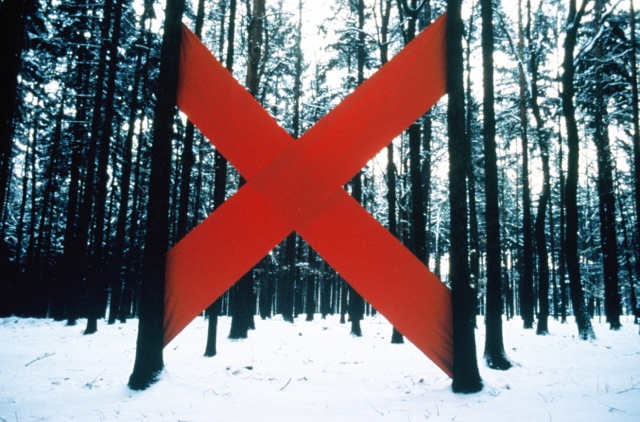
Art installation in a natural landscape or forest


Amor:  Do you try to portray particular messages and meanings through your land art?

Strijdom: It depends from work to work. But in general, no, I don't go out to make a statement. I will always first let the forces of nature influence me, and what is created is a result of the site. But, when it comes to certain art festivals or commissions then you have an obligation towards the client and people - most of the time a certain theme has to be addressed. Recently I had an art work installation at the Circa gallery in Johannesburg where I made a statement against 'fracking' in the Karoo, because I felt it was necessary that by working in the landscape and having a close relationship with the landscape, you have to raise your voice in protest.

Commissioned artwork or installation art by Strijdom van der Merwe in South Africa of a field of yellow hands


Amor:  Do you see yourself still doing land art, in 20 years time?

Strijdom: Yes, I guess that will be he case, the format may change and the scale of the work may change but the message may still be the same.

Amor:  What advice do you have for artists seeking to experiment with, and explore the medium of land through art?

Strijdom: This is no easy road. You have to learn the basics of art, going through all the disciplines of colour use, balance, perspective etc. Once you have an educated understanding of the history of art, and nature and human interaction, only then will you be able to create work that is a true and honest reflection of the site and understanding of our relationship with nature. To put 10 stones in a line to end up as an artwork is a life time of knowledge and sensitive observation. But the rewards are greater than any painting that hangs on a wall.

Strijdom van der Merwe's work is included in many private and public art collections. His work can be seen on his website www.strijdom.co.za and featured on www.landartsouthafrica.blogspot.com. He is an integral part as artist, founder and committee member of South Africa’s first international Land Art event, entitled Site_Specific. Two beautiful coffee table books of Strijdom's art is published and available from:

Sculpting the Land - Kalahari.com | Exclusive Books
Sculpting the Earth - Kalahari.com | Exclusive Books

------------------------------------------------------------------------

Chelsea Amor Lotz is a mother, model, humanitarian, entrepreneur, professional writer & author, living for the evolution in consciousness.

Wednesday, September 26, 2012

Eco Art, By Chelsea Amor Lotz

For many generations artists have remained with the same question in mind: Is art sustainable, how can the human expression of art connect us to nature and to that of humanity?  Furthermore, is it possible for both humanity and nature to connect intrinsically, and through the use of art to improve and nurture the relationship and understanding between humans and nature whilst remaining to deepen the human expression, reaction and psyche towards our relationship with nature?

Some people wonder about eco art in a practical sense, it terms of sustainability and workmanship. Should art, they wonder, not inspire recycling, reusing and re-imagining the way art is used? Some of the greatest art pieces seen in the world today, are simply structured around the re-thinking of a theme, with new or different level of consciousness, allowing the theme to be utilised in a new way, although appearing the same. We see this all the time, with tables made from loo rolls, portraits made from plastic bottles and great pieces of art with recycled materials such as paperclips, tyres, plastic and rope. The use of such materials also brings into awareness the excess waste and the disastrous impact that pollution has on the environment, whilst understanding that waste can be reused for better purposes.

There is a huge and vast array of materials in which the use for ecological art means opening a new world, whilst allowing one to journey into the unknown and adventurously foray into new, but largely uncharted territories of ecological art.

Some of the most beautiful pieces of eco art, have begun with the thought in mind of working with nature, and then expand into beautifying and working in accordance with nature. A typical example of this is land art, where the vast space, terrain and weather conditions, including the rhythms of nature are taken into consideration. South Africa has been at the forefront of expanding its global recognition on land art; in Plettenberg Bay in 2011, artists specialising in land art gathered in South Africa, traveling from around the world to share, display and expand on this interest.

Land art is a beautiful example of how it is possible to not only work with nature, but to display and represent an individualistic concept of our connection with nature, and how that connects us to the earth.

Art in a sustainable sense, is also the consideration of the effects of chemicals in paints, and dyes, that will inevitably end up in the earth and in water. By moving to more sustainable, naturally sourced pigments, without the toxic chemicals, it makes a definitive stand on the evolution of art to becoming a sustainable practice. Ethical pigments and dyes are being made commercially, although it is quite easy to prepare natural paints at home.

The aim of art has always been to entice, shock and satisfy the sense, sometimes one or all of the above, yet by considering the relationship to nature and the use of materials, man is able to make a stand by creating a bridge between art and a sustainable world. Furthermore by the imagining of abstract art and it's context to nature, for example the use of nature to mimic or copy nature, only deepens our relationship and understanding to nature.

It is in this, that we begin to understand that art, can not only be used for the aesthetic effect of being visually pleasing or emotionally moving, but that art can create a statement that is in support in the evolution of human consciousness and our relationship to the beautiful, diverse and immense world that we live in.

- Chelsea Amor Lotz

Friday, September 7, 2012

Little Green Day Activity


On 26 August 2012 an event called the Little Green Day was hosted by Deer Park Café in Vredehoek, Cape Town. The event featured a solar-powered stage for musicians, great music, organic and vegetarian food, some product stalls, and workshops. One of the workshops were facilitated by me, Janet Botes, and were open to anyone who wanted to join. A couple of kids joined and we created some toys, unfinished artworks and gadgets by using discarded food packaging, plastic bags and other 'waste'. Instead of using paint, we coloured our creations with coffee (the cheapest I could find, but next time I'll try using fair trade coffee).


Mask made from a pizza box lid, and a rolled piece of newspaper as 'stick'.

Why not gather some tools and random bits, invite some friends, open a bottle of wine, and together make things with what you have in front of you. It's fun to just play around and experiment - you don't need to have an end product or idea in mind, just attach and wind different pieces of plastic, polysterene and plastic bags together and see what you are able to create! Or if you like kids, or have kids, do the same (without a bottle of wine, of course!), you'll be delightfully surprised at the funky ideas that children come up with.

Instead of using glue or tape, find and develop other techniques to attach things. Here's some ideas or suggestions:
  • wrap torn/cut pieces of plastic, chips packets, crackerbread foil or newspaper around an item
  • thread with discarded/old rope, twine or pieces of twirled paper/foil/plastic
  • fold and cut cardboard or paper, making tags that fit into slits

Have fun!

Tuesday, June 5, 2012

Threads of plastic


These pieces of plastic were picked up in a stretch of beach of only about 7 meters in Bloubergstrand! Plastic debris and bags cause sea animals and birds to suffocate, and they also don't biodegrade, just break up into smaller bits of plastic which gets eaten by fish, birds, dolphins and whales. Have a look at this great ad that illustrates my point:


A great way to use plastic is to use it as rope or thread. Simply tear or cut it into strips, twirl or roll them into useable strands, and knot them together.


In this way, I've started using plastic in crochet pieces:


I learnt how to crochet when I joined in some sessions of The Woodstock Art Reef Project. WARP is crocheting a symbolic installation of sculptural coral reef structures to extend the awareness of environmental issues and related aspects of science, math and art within the  community of participants and in public forums.


Go to artreefproject.ning.com to find out more about the next gatherings and sessions


Yet another way to use strips of plastic grocery bags in a functional manner